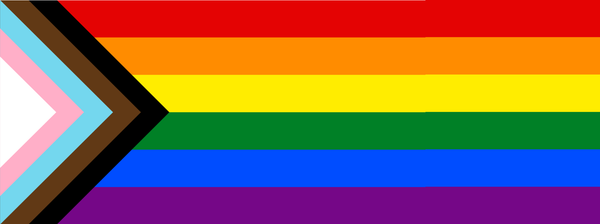
Music to be proud of: a history of LGBTQIA+ composers
1 Jun 2026
News Story
In the western world, the performing arts have often been accused – when it comes to its composers, at least – of being dominated by straight white men. Some progress has been made as far as shedding light on long-overlooked women and Black composers, but the challenge is a little different when it comes to sexuality.
The acronym LGBTQIA+ (in which the plus sign denotes identities not covered by the preceding initials) acknowledges a spectrum that is less recognised the further back we turn the clock. June being Pride month, it's the ideal time to take a closer look at composers in the wider queer community, many of whose music is widely programmed today.
The terminology alone has changed over the centuries, and if we are to consider any given composer to have been anything other than heterosexual, what evidence exists is often decidedly ambiguous. The medieval German composer Hildegard of Bingen, for instance, was known to be very close to her fellow nun Richardis von Stade and may therefore have been what we would now consider lesbian. With only Hildegard’s side of the story to go on, however (and noting that its mere survival is remarkable for the 11th century), there's an inevitable degree of supposition in this interpretation of her “divine love” for Richardis.
Moving ahead to early 19th century Austria, some have taken Schubert’s lack of interest in women as an indication that he was gay. With not much sign of his having shown much interest in men either, the jury is very much out (pun not intended) on this matter, and we'd be surprised if A Celebration of Schubert (11-12 February) proves things either way! He could just as easily have been asexual, but again, we should be wary of applying our understanding of sexuality to the past.
All this to say that, even in the presence of documentary evidence, any claim about a given composer’s sexuality requires some conjecture. Perhaps unsurprisingly, it’s in the (more widely chronicled) high echelons of society that we tend to find historical proof of non-heterosexual lifestyles. The 17th-century French composer Jean-Baptiste Lully, for example, worked at the court of Louis XIV, where he was known for having affairs with men and women. Homosexuality was a capital offence at the time, and he seems to have been saved from execution only by dint of the King’s brother, Philippe Duke of Orleans, being himself openly bisexual. (If Lully is recalled for any aspect of his private life today, however, it is the circumstances of his death: he sustained a wound while conducting – at the time, a matter of striking the floor with a staff, which would have fine if he hadn't hit his foot with it – and refused to consider amputation even after gangrene set in.)
The following century, over in Prussia, French culture was among the passions of the Crown Prince Frederick, whose father, the authoritarian Frederick Wilhelm I, disapproved strongly of what he deemed effeminate interests. The young man’s artistic endeavours extended far into his adulthood, when as Frederick the Great he wrote much music for the flute (his own instrument) as well as operas, the latter in collaboration with Carl Heinrich Graun, one of his court composers. He achieved a great many military successes on acceding to the throne, a chief reason for his later idolisation by the Third Reich – who presumably chose to ignore the many reports about his sexuality (recorded by Voltaire and Casanova, among others), which took in several male lovers and a childless marriage. The Nazis also turned a blind eye to the bisexuality of Siegfried Wagner, a composer and conductor who provided a vital link to his father Richard (a central pillar of the regime's identity) during their rise to power.
In the 19th century, the questions about the young Chopin’s sexuality – more circumstantial evidence of same-sex attraction – become more intriguing considered alongside his later 9-year affair with one Amantine Dupin, better known to us as the writer George Sand. This male pseudonym was only one of many ways in which she confounded expectations, which extended into dressing as a man and smoking in public, on top of which there is a strong element of gender ambiguity in the way she wrote about herself. Although she undoubtedly cut a subversive figure in 19th century French society, she was widely admired by the country’s writers: the eulogy at her funeral was given by no less a figure than Victor Hugo.
In Tchaikovsky (whose Serenade and Rococo Variations the Orchestra performs this autumn, 5-6 November) we have probably the best-known of composers whose homosexuality is in no doubt. He seems to have swung from rather fatalistic acceptance to self-disgust and dejection – he attempted suicide after marrying one of his students in a disastrous bid to curtail it – but in musical terms, it translated into many sympathetic portrayals of doomed love affairs. Besides Romeo and Juliet's doomed lovers and the unrequited passions of Eugene Onegin, we have an adulterous liaison in Francesca da Rimini and even incestuous attraction in Manfred, though the myth that the Pathétique Symphony was effectively his suicide note has been long since debunked. Perhaps the truest sign of Tchaikovsky’s importance in the history of Russian music is that knowledge of his homosexuality was widely suppressed there for a good century after his death.
Over in Edwardian England, a look at the biography of Ethel Smyth shows a lasting relationship with a single man, Henry Bennet Brewster, alongside several affairs with women, for whom she admitted feeling a different sort of kinship. This spills over into some of her music, but her contemporaries were more concerned with what they perceived as its masculinity, and whether this was proper for a woman composer. As the de facto musical figurehead for women’s suffrage, this may well have added insult to injury, but it’s very much a sign of the times – which (thankfully) were changing.
A good deal of Poulenc’s music embodies the spirit of the Roaring Twenties, full of sparkling humour and joie de vivre, but it would be too simplistic to read its camp insouciance as a reflection of his homosexuality, especially in the light of his Christian faith. He rediscovered this in 1936 and went on to explore it in several more serious works including Dialogues of the Carmelites, an opera about a convent of nuns at the height of the French Revolution. As in La Voix humaine, which Carolyn Sampson sings with us on 18-19 March next year, the music shows a profound empathy for his female characters. It’s a trait that can be found across much of the queer artistic community: in terms of novelists, for instance, we might mention EM Forster or Patrick Gale.
Britten (featured in our Cello Classics concerts, 10-13 June) also treats female characters sympathetically in his many operas, but they are more noted for their portrayal of outsiders. Whether or not a production implies them to be homosexual, many of them are misunderstood and exist on the fringes of society, though only von Aschenbach (in Death in Venice) is explicitly attracted to another male. In a clear sign that views were changing (however slowly), Britten's partner Peter Pears received a message of condolence from Elizabeth II on the composer’s death in 1976, and the funeral was attended by the Queen Mother, all this only nine years after the process of decriminalising homosexuality in their native England had begun.
Across the Atlantic, the wealth of American composers who came to prominence during that same century included a number we would now probably deem LGBTQIA+ power couples: Cage’s relationship with the choreographer Merce Cunningham lasted half a century, while Barber and Menotti (whose music can be heard in Barber's Adagio & Violin Concerto, 29-30 October, and Cello Classics respectively) were together for four decades. Bernstein is generally considered to have been bisexual, though Arthur Laurents (one of his collaborators on West Side Story) considered him “a gay man who got married”.
Social attitudes to homosexuality in the west have of course moved on considerably since: it’s only in the last three decades, for instance, that the acronym LGB has expanded to include other marginalised communities. More composers identify as LGBTQIA+ than ever before, and as in the other creative arts, their experience as minorities is now more widely recognised, adding considerably to the rich tapestry of the human condition – so whether you are a member of this broad community or an ally, happy Pride!
Hear the SCO perform music by LGBTQIA+ composers
Related Stories
Classical music on the silver screen
14 October 2026
Join us as we take a close look at the filmic connection in several of our forthcoming concerts.
Craigmillar Residency Shortlisted for 2026 SURF Awards
28 September 2026
The Craigmillar Residency has been shortlisted for the 2026 SURF (Scotland's Regeneration Forum) Awards
Bogdan Božović: "I felt a lot of love and support on the Summer Tour"
15 September 2026
A warm welcome to the Orchestra's new Co-Leader!