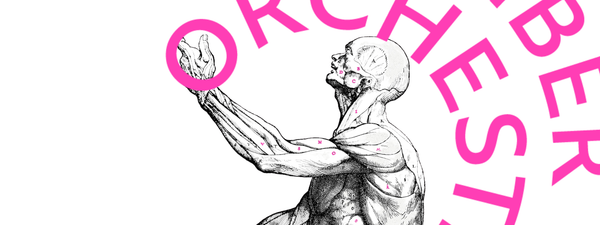
Silent Teachers by Jay Capperauld - programme note
17 Nov 2026
News Story
Silent Teachers by Jay Capperauld premieres at 7.30pm on Wednesday, 18 November
Commissioned by Edinburgh Medical School to mark 300 years of medical education and research at the University of Edinburgh in 2026, Silent Teachers is shaped by the dignity and generosity of the individuals who donate their bodies to medical science. These selfless donations offer vital training for young anatomy students in developing their understanding of the human body, so much so that the students refer to those individuals as their “silent teachers”. The process of body donation is handled with great compassion by the university’s Anatomy Department which supports the individual and their loved ones in the lead up to and well after the point of donation in a form of pastoral care that puts empathy and humanity at the heart of what is, at first glance, a clinical setting. As such, this new piece for Clarinet and String Quartet is as much a tribute to the families who are dealing with their grief and loss as it is to the silent teachers themselves.
The piece is divided into five movements which follow the grieving process through the symbolic exploration of different parts of the human body. It is often said that grief develops in stages with one famous study suggesting that there are five defined stages of grief. Musically, this concept of different aspects of sadness has already been explored by the late 1500s composer, John Dowland, whose composition “Lachrimae, or Seaven Teares ” consists of seven melancholic movements which allude to various types of “tears” that form a kind of grief narrative. In this way, Silent Teachers attempts to examine the distinct stages of grief from different angles by thematically weaving a descending four-note phrase known as the “falling tear motif ” from Dowland’s Lachrimae into each movement as a lamenting musical starting point. Occasionally, elements of the motif are audible and at other times it has been subsumed into the emotional identity of each movement as grief’s deep process changes it into something new.
Much like the explorations and learning of an anatomy student, each movement of the work explores key bodily components that make up the physical form of a person, but in this emotional context of grief, each body part represents a particular emotion that is associated with the journey of loss and acceptance. The five movements are ordered as follows:
1. TEARS OF THE FLESH (Despair)
2. TEARS OF BONE (Numbness)
3. TEARS OF THE VEINS & NERVES (Anger & Pain)
4. TEARS OF THE BRAIN & ORGANS (Processing & Understanding)
5. TEARS OF THE HEART (Acceptance)
Emerging from a hushed silence into sound, the first movement TEARS OF THE FLESH explores death in a corporeal sense where the flesh of the body represents despair as each instrument gradually joins in a singular forlorn expression of grief.
The second movement TEARS OF BONE represents the emotional and physical numbness of grief as a static harmonic language creates a form of inertia alongside a restless textural underpinning which suggests the emotional disquiet of this stage of grief.
The third movement TEARS OF THE VEINS & NERVES acknowledges the harsh and raw emotions of anger and pain through the complex intertwining networks of veins and nerves of the body. Strident gestures and close weaving melodies knit and twist together in an outpouring of untamed feeling that attempts to capture this visceral phase of grief.
The fourth movement TEARS OF THE BRAIN & ORGANS signifies an emotional turning point that begins to process and understand the feelings of loss and despair. This hymn-like movement attempts to find order and make sense of the previous musical starkness via the parts of the body which help us transform and comprehend the physical world.
The fifth and final movement TEARS OF THE HEART concludes the journey of grief in an expressive release of all prior sadness through the part of the body most associated with feelings of love and sentiment. In this sense, the journey concludes with a different form of tears from those of despair; the kind of bittersweet and contented tears of acceptance and fond remembrance. Throughout each movement, the clarinet acts as a kind of teacher who guides the string quartet in a musical conversation with grief and the human body, and ultimately leads us through a journey of emotional catharsis and healing.
© Jay Capperauld

Related Stories

Highnote: a new creative partnership for the SCO
17 November 2026
Read about our partnership with Highnote, Scotland's National Centre for Music
Talent Development with the SCO
16 November 2026
Read about our work with young musicians.
Social prescribing: an introduction
10 November 2026
Read about the Orchestra's new healthcare initiative!